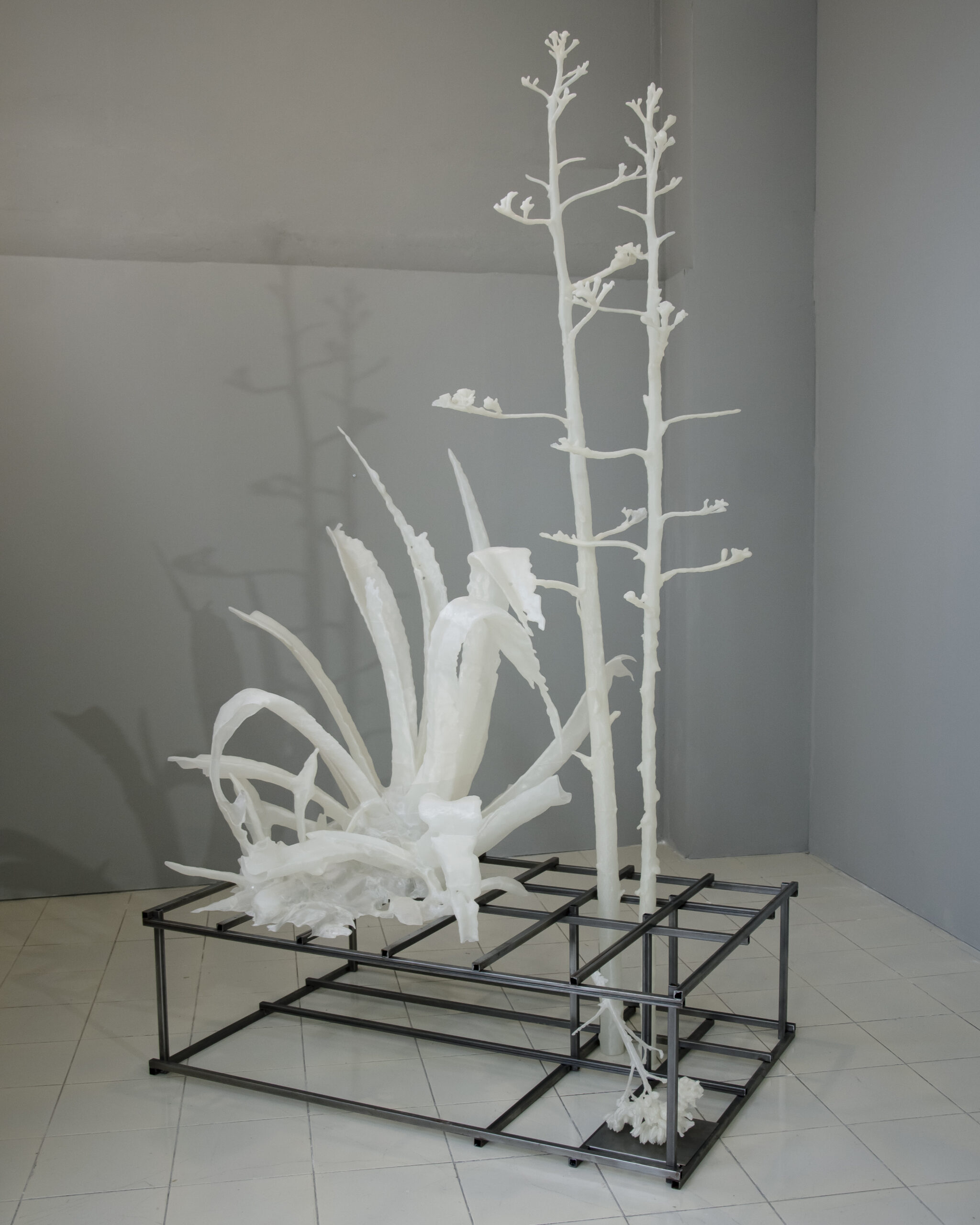
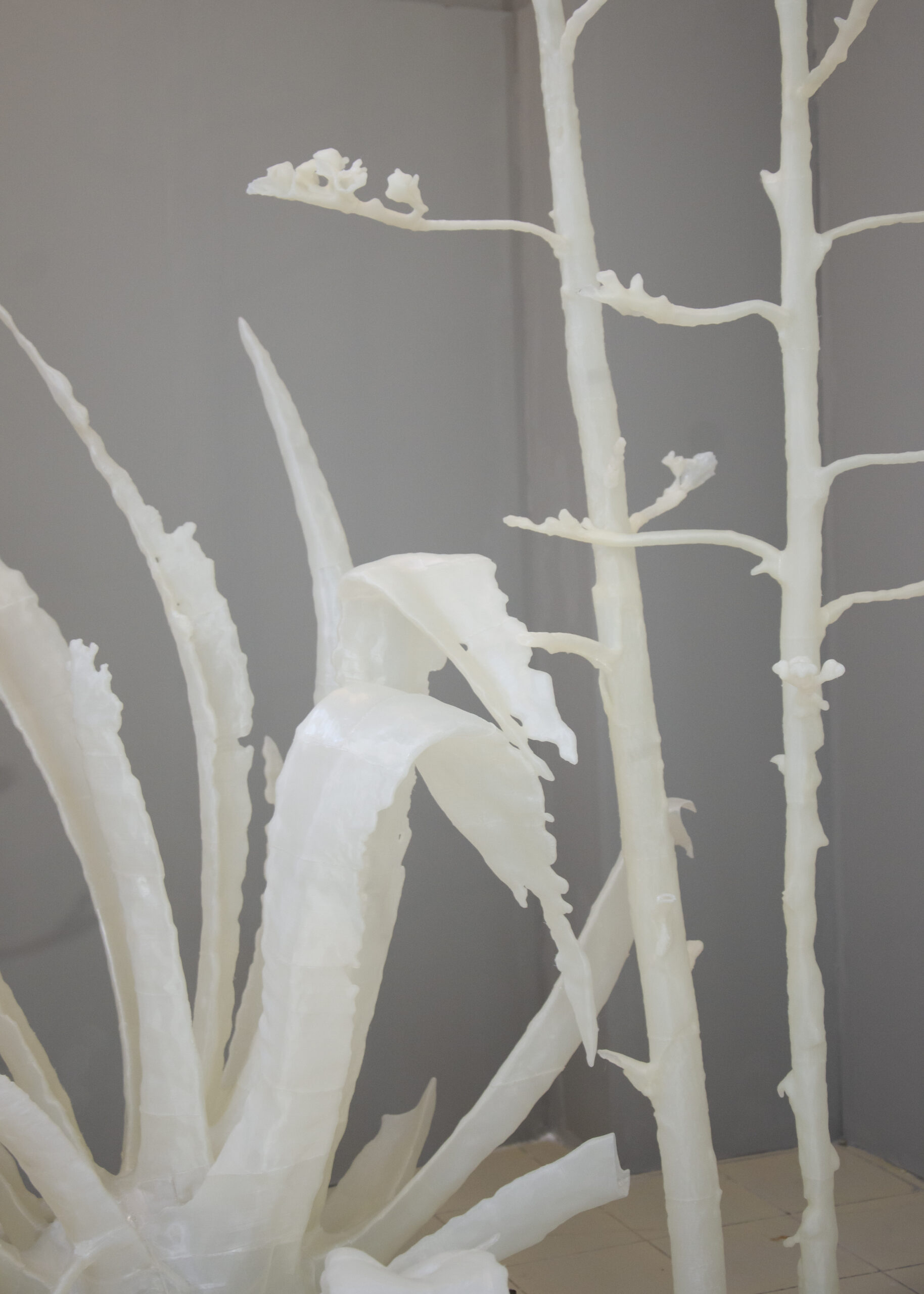
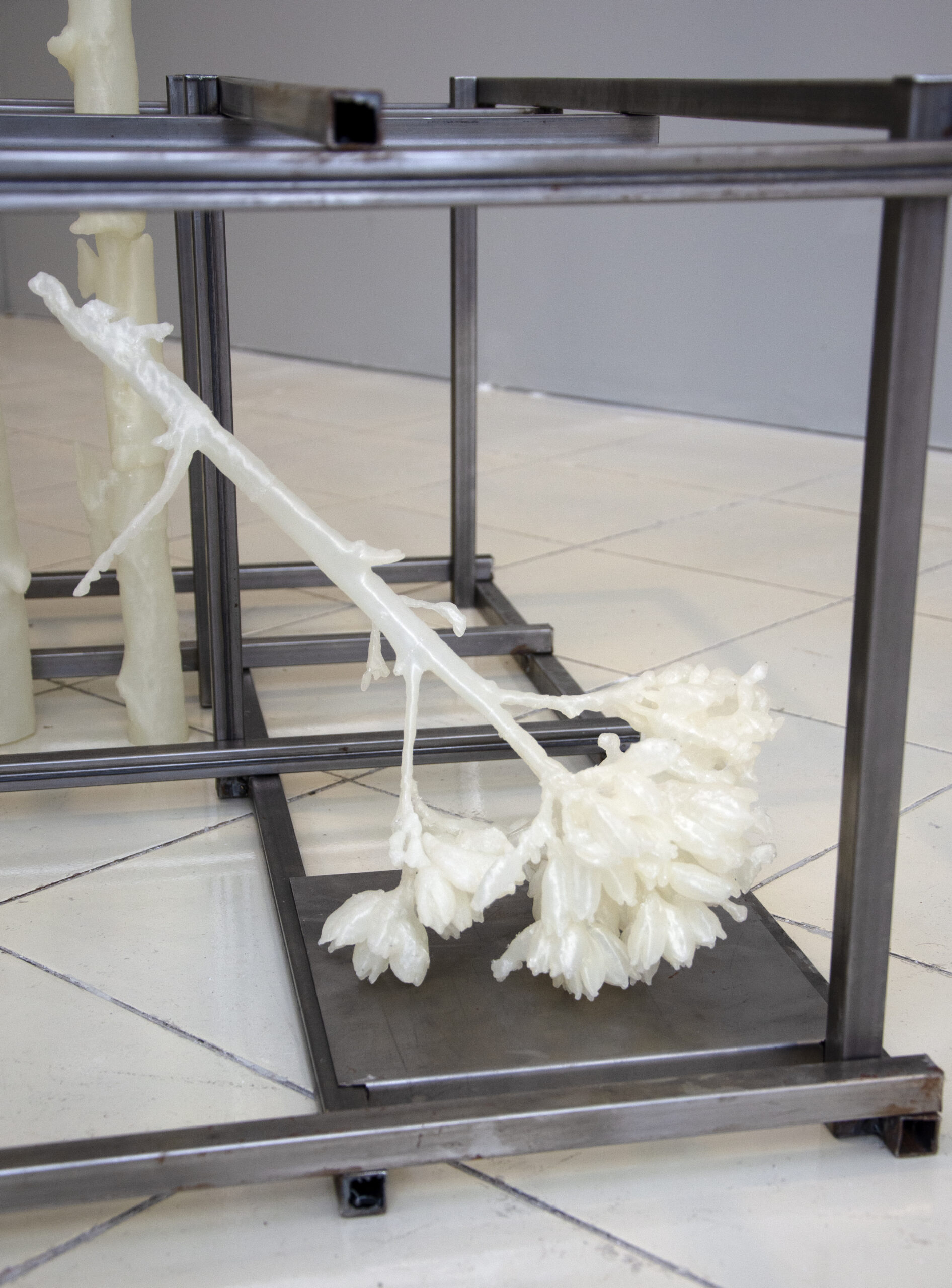
Agave Americana – Athanatos
Text by Art Theorist, Matina Charalampi
Year 2058.
The natural environment is reflecting a process of gradual recovery. After decades dominated by the ‘extractive view’ treating the earth and nature as objects for exploitation and profit, in line with colonialist logic we are now entering an era shaped by an entirely different perspective. Echoing Michel Serres’ Natural Contract: The natural world will never again be our property, either private or common, but our symbiont.
Botanical sciences are flourishing, having substantiated that plants are capable of communication through chemical secretions and fungal root networks, thus confirming the theories of J. C. Bose. Significantly, plant intelligence has played a decisive role in advancements in robotics and information systems. Alongside scientific disciplines, artistic creation is now valued as a practice that aligns with the innovative Ecological Evolutionary Developmental Historical Ethnographic Technological Psychological approach, as well as with a decolonial understanding of our world.
The agave, commonly known as Αthanatos (immortal), did not survive into our time. It once thrived across the Greek mainland and islands thanks to its resilience to drought. It was a characteristic succulent of the Cyclades and Attica, and appears in 20th-century Greek landscape painting. The plant’s name refers to the beautiful daughter of Cadmus who, according to myth, killed her own son, Pentheus. It is speculated that the name was given due to the plant’s thorny leaves, which are capable of injuring its own seedlings growing at its base.